

Santa Cruz County officials are preparing for what could be a historically strong El Niño this winter, with crews strengthening levees, clearing drainage channels and improving emergency warning systems in communities still recovering from the devastating storms of 2023.
The Santa Cruz County Board of Supervisors on Tuesday approved a winter preparedness report outlining efforts by several county departments, the National Weather Service and the Pajaro Regional Flood Management Agency.
Brian Garcia, warning coordination meteorologist for the National Weather Service, told supervisors there is a 95% chance of a very strong El Niño developing this winter, potentially reaching record-breaking levels.
But Garcia cautioned that a powerful El Niño does not necessarily mean a particularly wet winter.

“We could see that again, but it’s not a guarantee,” Garcia said, referring to the heavy storms of 2017.
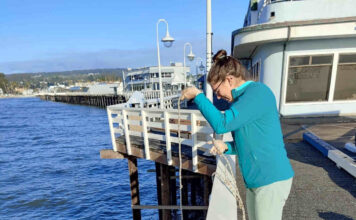
Of particular concern is a phenomenon known as a Kelvin wave, a pulse of warm ocean water that can temporarily raise sea levels.
Garcia said ocean temperatures have already raised water levels approximately six inches, with Kelvin waves adding another six inches. Those conditions, combined with high tides and storm surges, could produce significant coastal flooding and erosion.
“So from our office, you’ll probably see more coastal flood advisories and coastal warnings this winter than you’ve ever seen in the winters past,” Garcia said.
Pajaro Valley preparations
Mark Strudley, executive director of the Pajaro Regional Flood Management Agency, outlined six projects designed to strengthen the Pajaro River levee system and improve water flow before winter storms arrive.
The agency has maintained the levee system since late 2023, following the March levee breach that inundated the community of Pajaro and forced thousands of residents to evacuate.
Crews are installing seepage berms to reinforce vulnerable sections of levee, particularly on the Monterey County side of the river.
They are also thinning vegetation along the upper two miles of the Pajaro River, including areas where levee failures occurred in 1995 and 2023.
Sediment removal is underway along Salsipuedes Creek and near its confluence with Corralitos Creek. Additional work is planned beneath the Highway 152 bridge, pending a Caltrans permit.
Strudley said much of the vegetation clearing and sediment removal should be completed by the end of October.
The agency is also replacing a culvert at Martin Ditch upstream of Watsonville, purchasing a backup generator for the Atri Court pump station and repairing levee slopes damaged by burrowing rodents.
Flood-fighting equipment is being staged on both sides of the county line.
The work comes as permanent improvements to the Pajaro River flood protection system remain underway.
Roads and drainage
Santa Cruz County Assistant Public Works Director Steve Wiesner said additional Measure K funding has allowed crews to substantially expand roadside drainage maintenance.
The county expects to clear 260–270 lane miles of roadside ditches this year, compared with 204 miles last year and 83 miles the year before.
Crews are also clearing culverts and drainage channels in flood-prone areas, including Corralitos Creek, Kelly Lake, Coward Creek and Pinto Lake Ditch.
The county has doubled its winter on-call staffing and positioned heavy equipment and flood barriers throughout the region.
A new Measure Q-funded forecasting tool for Corralitos Creek will help emergency officials anticipate rapidly rising water levels and issue warnings.
Officials have also tested water-level monitoring equipment in Watsonville Slough and high-water detection systems along Beach and Shell roads.
Emergency response
Dave Reed, director of the county’s Office of Response, Recovery and Resilience, said the county has made significant improvements to emergency communications since 2023.
At that time, emergency officials lacked the ability to communicate directly with residents through their own notification system.
The county has since implemented CruzAware, which allows officials to send targeted emergency messages in multiple languages.
“Our communication tools this year, as we come into the El Niño, are far in advance from where we were in 2023,” Reed said.
Community Emergency Response Team volunteers have also been visiting flood-prone neighborhoods, distributing preparedness information and discussing evacuation procedures.
As of Oct. 7, volunteers had contacted 649 residents and businesses, with a goal of reaching approximately 2,000.
Sheriff’s Lt. Dee Baldwin said deputies now have evacuation door hangers residents can display when leaving their homes, allowing emergency responders to identify evacuated buildings more quickly.
The Sheriff’s Office has also acquired four electronic message boards and trained deputies to distribute emergency alerts within minutes.
The county has agreements to open resilience centers at libraries in Boulder Creek, Felton, Scotts Valley and Aptos during extended power outages or extreme weather.
Questions about preparedness
During board discussion, Supervisor Kim De Serpa raised the possibility of declaring an emergency before storms arrive to expedite preparations.
County Counsel Jason Heath advised against the move, saying state law requires an actual or impending emergency.
“I believe that if you declared an emergency right now, you wouldn’t be able to make the legislative findings to do that,” Heath said.
Supervisor Justin Cummings also questioned whether changes to federal disaster assistance could complicate recovery efforts.
Reed said county officials are monitoring potential changes to FEMA programs and preparing to seek additional expertise to maximize reimbursements following disasters.
Officials urged residents to register for CruzAware, identify their evacuation zones, prepare emergency supplies and clear drainage around their homes before the first major storms arrive.
Santa Cruz County officials have staged sand and sandbags for public use at fire stations throughout the county as part of their preparations for winter storms.
Wiesner said additional flood-fighting materials have been positioned at county maintenance yards, including supplies in South County to help protect levees.
The Pajaro Regional Flood Management Agency is also building sandbagging stations for crews working along the Pajaro River levee system. Executive Director Mark Strudley said the materials will allow workers to respond to erosion and water seepage that could threaten the levees.
County emergency officials urged residents to identify their nearest sandbag distribution site before storms arrive. Community Emergency Response Team volunteers will also be available to help operate sandbag stations during emergencies.